


The easiest relationships to begin and the quickest to catch fire. Each person energizes the other beyond what they can take in, so the relationship lives in cycles of feeling full and taking a break.
You can recognize this relationship by its effect before you know its name: a conversation flows from the first minute as if it were picking up an old thread, and the energy rises in the other person’s presence until you find yourself planning, suggesting, and moving more than usual. Then, after a long day together, each person feels a vague need to be alone for an hour or a day, even though they cannot point to a single disagreement. After a few days apart, they miss that same energy and meet again as if nothing happened.
This relationship is called “Activation.” It joins two types from the same quadra. They agree on only one of the four dimensions used to build the sixteen types: energy direction. They are either both extraverted or both introverted. They differ in the other three: how they take in the world, how they judge it, and whether their pace is decisive or flexible. There are eight such pairs, two in each quadra.
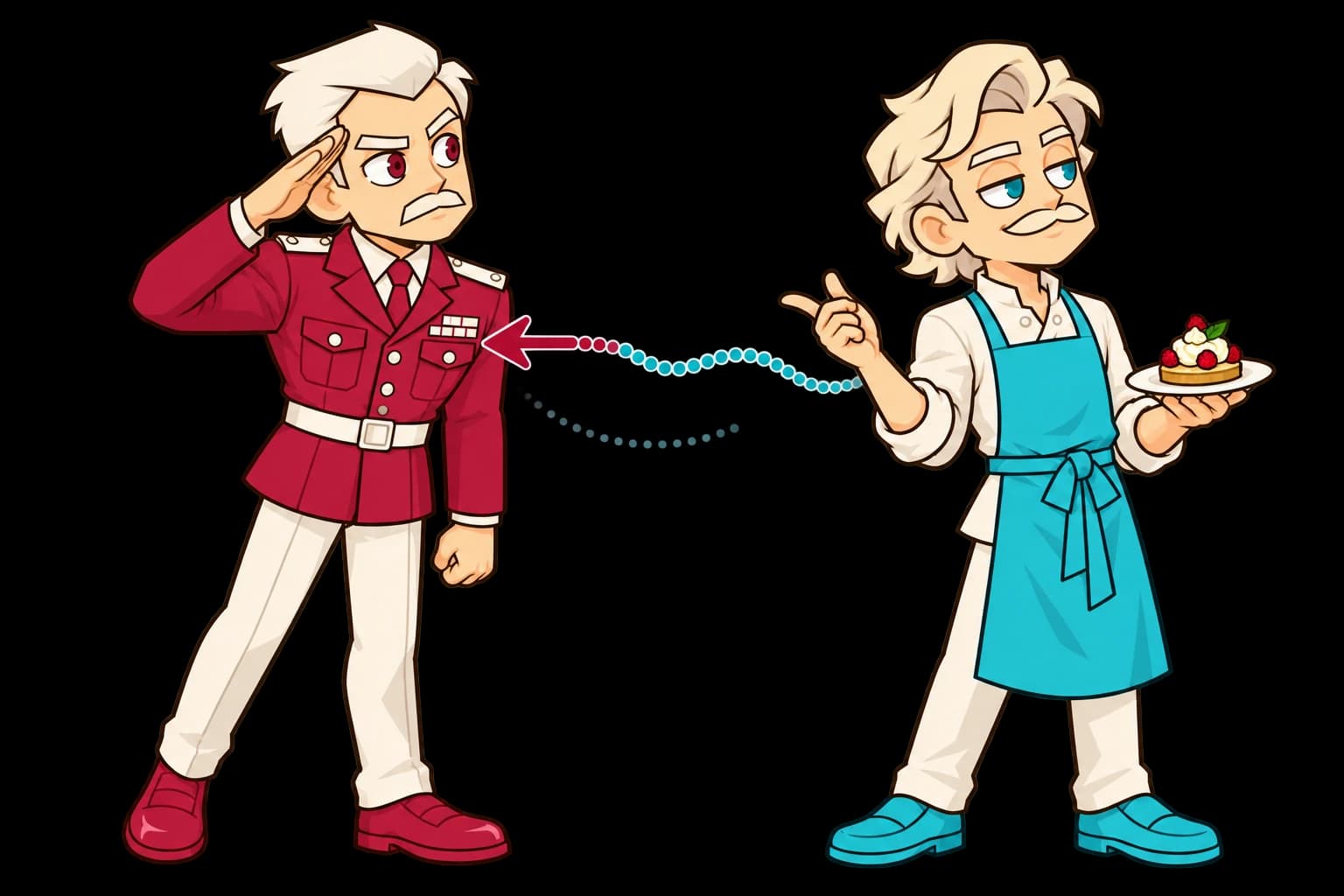
The strange thing is that the ease of the beginning is also what makes the relationship tiring. While most relationships need months for each person to reach the other, these two connect in their first meeting, because what each presents lands directly on what affects the other most. Then they discover the dose is more than they can absorb: a charger stronger than the battery, filling it quickly and heating it just as quickly. This image—the charger and the battery—will help explain what seems unusual here: enthusiasm that seems to come from nowhere, and withdrawal that seems to come from nowhere too.
The nature of the relation
The relationship can be summed up in one sentence: what each person presents reaches the other directly, without a middle step, takes effect at once, and then becomes more than they need. This idea rests on the eight aspects that make up a personality, explained in “How to Read the Relationship Pages.” Every relationship between two types is a particular way those aspects meet. Activation is the way everything presented reaches its destination by the shortest route.
What sets it apart is that both ways a person expresses themselves reach the other’s easy channels exactly, in both directions: each person’s tool lands on the other’s hidden need, and each person’s quiet skill lands on what the other has to perform in public. None of the other fourteen relationships starts faster. But each person’s core—the most present and least interrupted part of them—lands on what excites the other, an aspect that can take only small doses.
The relationships that catch fire fastest are the same ones that need a break soonest.
A Spark That Arrives at Once
What meets here: Each person’s tool meets the other’s hidden need.
The practical skill each person displays is exactly what the other needs and cannot provide for themselves, so relief comes very early. One finds that the partner has organized in minutes a mess they had been circling for a week. The other finds that the partner has turned an ordinary evening into something delightful, or noticed their hunger and tiredness before they did. Because this help arrives as an action rather than advice, it is accepted without resistance or embarrassment.
But giving here has a distinctive nature: the tool works when a situation calls for it, then quiets down, while the hidden need asks for a steady supply that never stops. The help is therefore powerful and intermittent at once—wonderful when it arrives, absent when the partner turns to something else. That is why many people in Activation describe their relationship as “wonderful when we meet” and cannot explain the emptiness that follows.
A Living Example, Without Words
What meets here: Each person’s quiet skill meets what the other has to perform in public.
What one person struggles to do in front of others, the other does while talking about something else. The person who is struggling sees a living example of what they have been trying to perform by following rules: how to say no without hurting the relationship, how to finish a task in half the expected time, or how to guide a group conversation so no one is ignored. Because the example comes without a lecture—it is simply someone behaving naturally—it is easy to imitate and hard to resist.
There is a second, less pleasant effect: watching something that tires you get done effortlessly can make you feel inadequate. Someone who plans a meeting and rehearses their words the night before may not enjoy seeing their partner improvise the whole thing easily and then forget about it. That is where the small jealousy between people in Activation comes from, usually expressed as mutual teasing that often has a grain of truth.
A Core That Pours into What Can Only Take Small Doses
What meets here: Each person’s core meets what excites the other.
Each person pours everything they have into an aspect that can handle only a little at a time. This is the secret of both the warmth and the exhaustion. When they meet, each feels awake: a desire to work that had faded returns, and they find themselves planning a project or laughing more than usual. Then the dose continues hour after hour, and enthusiasm begins to turn into pressure: there is more than they can take in. Neither can point to a particular mistake, because the cause is not something done wrong but an excess of something good.
Two effects follow. First, the relationship moves in cycles like charging and unplugging a battery—a warm period of closeness, a short time apart, then a return. This is its natural way of lasting, not a sign of failure. Second, criticism in this area lands with unexpected force: one sarcastic remark about the other’s enthusiasm can put out the whole evening. That quick extinguishing is not oversensitivity; it is the other side of catching fire so quickly.
Advice When a Hand Was Needed
What meets here: Each person’s vulnerable point meets what the other is skilled at but looks down on.
The partner is fully capable of doing what the other cannot, but does not think it is worth taking on. So the help comes as a comment rather than a hand: “Don’t worry about it,” “Ignore it and it’ll pass,” or “You should have said no from the start.” The advice is often correct because it comes from someone who knows the field, but it reaches someone who was waiting for the partner to handle the matter for them. It can sound like their difficulty is being dismissed.
This small difference separates Activation from its closest counterpart: there, vulnerable points are quietly covered and handled without comment; here, they are pointed out with a passing suggestion, and the person is left to deal with them alone. That is why Activation is said to be enjoyable in good times and less supportive in hard times. This is a fair description unless the two learn to ask directly for action instead of waiting for it.
What They Share and Where They Differ
- ValuesBoth belong to the same quadra, so they rarely disagree about what deserves their time and often disagree about how to spend it. The flip side is that whatever the whole quadra looks down on may be neglected by both.
- Interests and paceThey stand at opposite ends of the field of interest. Their conversations are full of new things—each brings news from a world the other does not visit—and working on the same task can be difficult. On top of that is their clearest everyday difference: one is decisive and wants to agree on a time in advance; the other is flexible, leaves the decision until the last moment, and sees a ready-made plan as a constraint.
- Energy directionThey are alike here, which amplifies the effect rather than balancing it. If both are extraverted, the relationship speeds up and grows louder until one needs silence. If both are introverted, it becomes quieter and deeper, but each waits for the other to take the initiative. Weeks may pass without a meeting, then they return as if they had never been apart.
How it changes with closeness and time
No relationship stays at one distance or remains unchanged:
By distance
- At a distance
One meeting is enough to have an effect, because what each person presents lands directly on the other’s easy channels. This may be the easiest relationship to start on a train seat or in a waiting line. The limit is that the first impression is stronger than the relationship can sustain over the long term.
- At a moderate distance
This is its most suitable distance. A shared project with a beginning and an end, or a weekly rather than daily meeting, brings out the best in both: high energy, ideas multiplying, and quick results.
- Up close
Living under one roof means a continuous current of stimulation that the relationship’s enthusiasm cannot take, as well as daily friction over schedules. This does not mean the relationship cannot work up close; it means each person needs separate space and an openly agreed right to withdraw for a while. What looks like an emotional problem at close range is mostly a matter of quantity: there is no lack of affection, but too many stimuli. That is why simple solutions can seem silly until tried: two rooms instead of one, or an hour of quiet after coming home from work.
Over time
- First meeting
It goes remarkably easily: a shared subject within minutes, conversation quickly moving beyond politeness, and the sense that the other person is “unusually nice.” Many friendships of this kind begin by chance rather than through an arranged introduction.
- Growing closer
Everything speeds up: meetings become more frequent, projects are proposed, and each feels more active since meeting the other. This is when the first excess dose appears—a puzzling tiredness after a lovely day. People often read this signal as fading interest, when it is really a need for a break.
- Settling in
The relationship settles when it finds its own cycle: days together and days apart, or a regular weekly meeting instead of constant presence. A pair that accepts this rhythm can keep its warmth for years. A pair that fights it—by clinging to each other or reproaching every withdrawal—wears itself out quickly.
- Over the long term
The relationship becomes a source of renewal more than a source of security. Even after years, both can still energize each other, but neither becomes a place where the other can rest completely. A likely explanation, though not the only one, is why Activation is said to make a lasting friendship but a harder day-to-day partnership.
How each sees the other
The relationship does not feel the same from both sides. The clearest difference between the two experiences is their pace.
From the Decisive Person’s Side
The decisive person arrives with plans in hand: they know what they will do on the weekend and like to settle matters. They find in their flexible partner something they truly lack: a lightness that saves them from their own rigidity, and the ability to change a plan when it falls apart without feeling that the world has ended. They often say, “You’re the only person who can get me off my schedule and make me happy about it.”
Their particular risk is to treat this lightness as disorder that needs to be controlled. They start by reminding the partner about times, then planning on their behalf, then reproaching every delay. The more they press, the more the flexible person withdraws, because what looks like organization to the decisive person feels like closing off possibilities to the other. A way out is for the decisive person to keep their schedule for themselves and leave one opening in the week for what cannot be planned.
From the Flexible Person’s Side
The flexible person arrives open to what may come. They dislike being boxed into an early decision and believe the best things happen when events are allowed to develop. They find in their decisive partner a framework that keeps the day from drifting and a push that brings a project out of their head and into reality.
Their particular risk is to give in to the framework completely: leave every decision to the partner, then feel stifled without knowing why, and suddenly withdraw. It is better to say what they want early—even “I don’t want to decide yet”—because silence is read as agreement and later turns into resentment.
Where the two accounts meet is what makes this relationship unusual: each gives the other something they cannot create for themselves at the moment it is needed. There is no waiting, no intermediary, and no need to explain. What is offered arrives, and what arrives has an effect. That is why the two can resume the relationship where they left off, even after long periods apart.
The relation across areas of life
Friendship
Friendship in Activation is among the most enjoyable and least demanding to start. It forms quickly around a shared activity—travel, sports, or a regular evening out—and gives each friend a sense of being more alive in the other’s presence. Each suggests things the other would not think of alone: a midweek trip or an experience neither has tried.
The friendship needs quiet periods to last. Friends who meet every day use up their enthusiasm, while spaced-out meetings can preserve their warmth for years. It is strongest around a shared activity and weakest when it consists of talk alone. When they have a project or a regular time to do something together, their shared energy has somewhere to go instead of building up as tension.
Romance and Marriage
Romance brings Activation to its highest heat: attraction is quick, conversation seems endless, and the early days are full of discovery. Each often describes the other as “bringing me back to life”—an accurate description, since each awakens a side in the other that had been asleep. This is why the relationship often begins before the two people really know each other: they commit while still unfamiliar with how the other lives an ordinary day.
Then shared life brings its test. Living together means constant presence, which this relationship cannot naturally take, and daily clashes between someone who wants everything agreed in advance and someone who wants everything left open. Successful marriages build their rhythm deliberately: each has private space, and both accept that one person wanting an hour alone is not a reproach. What Activation does not provide is the stillness some people find in other relationships.
Work and Cooperation
At work, this pair shines on short, intensive tasks: launching a product, organizing an event, or rescuing a delayed project. Their shared energy raises productivity, and ideas multiply quickly. In long, routine work, the limits appear: the difference in pace turns schedules into a point of conflict, and neither finds steady support from the other in a weak area—only a passing suggestion.
For long-term partnerships, it helps to separate their areas: the decisive person leads what needs deadlines and commitments; the flexible person leads what needs adaptability and innovation. In a workplace hierarchy, a manager finds an activating employee who lifts the team’s spirits and brings ideas during quiet moments, but may also need to remind them constantly about deadlines. It is better to judge this employee by what they accomplish, not by their way of accomplishing it.
When they disagree
Every relationship has its own pattern of disagreement. In this one, conflict passes through three stages:
- The spark
It usually comes from one of two places. The first is pace: a time that was not settled or a plan that changed at the last minute. The decisive person sees this as disregard for their time, while the flexible person sees pressure to settle things as an unnecessary restriction. The second is a comment that lands on an enthusiasm: a sarcastic remark about something that makes one person happy or a passing dismissal of a project they care about. This point is more tender than either person expects. The evening suddenly goes flat, and the person who made the comment is stunned by an effect they did not intend.
- Escalation
The disagreement heats up quickly and cools down quickly, because the energy that charges them when things are good also charges them when they are angry. Neither finds a calming influence in the other: the partner is a source of movement, not stillness, so their presence raises the temperature instead of lowering it. Still, escalation rarely leaves a deep wound, because what is said hits strong areas rather than their vulnerable points.
- Resolution
The way out is practical before it is verbal: a short break, then a return. An hour in another room or a day without meeting is usually enough for the battery to settle, making the disagreement seem smaller than it did. Someone who tries to resolve it at its peak is making a mistake, because that is when the dose is strongest.
The relation in each pair
All eight pairs share this pattern, but what each person brings to it differs from one pair to another:
ILE gives the partner mental organization and a clear explanation for what seems tangled; ESE gives the partner care for comfort and the rhythm of the day. ILE’s curiosity about possibilities excites ESE, and ESE’s warmth excites ILE. ESE sees ILE’s quick execution as an example of what they have to perform; ILE sees ESE’s decisiveness as an example of what they have to perform. Neither handles personal boundaries or reading distant consequences well. Their days tend toward an open house: ideas, guests, and laughter, with difficult decisions postponed.
SEI gives the partner a warm atmosphere that LII misses and does not know how to create; LII gives the partner a range of possibilities that opens doors they had not considered. SEI’s calm and care for details excite LII, while LII’s logical organization excites SEI. LII sees SEI’s kindness as an example of what they have to perform; SEI sees LII’s ability to read outcomes as an example of what they struggle with. Neither handles confrontation and decisive action well. Their days tend toward a quiet sitting room, with everything requiring confrontation put off.
EIE gives the partner a sense of timing and what is coming; SLE gives the partner a framework and clear rules to organize emotional drive. EIE’s warmth excites SLE, and SLE’s strength excites EIE. SLE sees EIE’s openness to possibilities as an example of what they have to perform; EIE sees SLE’s practical competence as an example of what takes effort for them. Neither takes good care of comfort and health. Their days tend toward a shared campaign: a big goal, high enthusiasm, and exhaustion they do not notice.
LSI gives the partner firmness and the ability to finish what is being put off; IEI gives the partner warmth and expression that soften their strictness. LSI’s order excites IEI, and IEI’s intuition about what is coming excites LSI. IEI sees LSI’s care for daily details as an example of what they have to perform; LSI sees IEI’s sensitivity to relationships as an example of what is difficult for them. Neither handles opening up to uncertain things well. Their days tend toward a well-organized home inhabited by imagination.
SEE gives the partner loyalty and personal regard, and says plainly who deserves trust; LIE gives the partner insight that can save them from rushed decisions. SEE’s strong presence excites LIE, and LIE’s measured competence excites SEE. LIE sees SEE’s social warmth as an example of what they have to perform; SEE sees LIE’s openness to opportunities as an example of what they have less of. Neither handles cool logical consistency well. Their days tend toward an ambitious project: movement, deals, travel, and little rest.
ILI gives the partner practical solutions and precise criticism that prevents losses; ESI gives the partner firmness that moves them to act when they have been thinking for too long. ILI’s reading of the future excites ESI, and ESI’s loyalty and clear positions excite ILI. ESI sees ILI’s precision as an example of what they have to perform; ILI sees ESI’s care for home and health as an example of what they neglect. Neither handles expressing emotions in a group well. Their days tend toward a fortress: a small circle and careful calculations.
LSE gives the partner care for quality and thoroughness in details; IEE gives the partner personal warmth and an understanding of what is happening between people. LSE’s steady productivity excites IEE, and IEE’s ideas excite LSE. IEE sees LSE’s decisiveness as an example of what they have to perform; LSE sees IEE’s ability to shape the atmosphere as an example of what takes effort for them. Neither handles long-term planning well. Their days tend toward an open workshop: careful work and constant experimentation.
EII gives the partner a range of possibilities and a sense of what may come to be; SLI gives the partner practical skill that makes things work with less effort. EII’s sincerity and deep regard for people excite SLI, while SLI’s care for comfort excites EII. SLI sees EII’s quiet reading of outcomes as an example of what they avoid; EII sees SLI’s logical organization as an example of what they have to perform. Neither handles confrontation and decisive action well. Their days tend toward a quiet, well-run home.
















What can change its course
The pattern above is how the relationship tends to look when other factors are equal. Four factors can shift it:
- SubtypeComplementary styles have a calming effect that is useful here. An Organizer beside a Dominant, or an Adaptive beside a Creative, regulates the dose and protects the relationship from overheating. Two Dominant or two Creative subtypes together amplify what is already amplified: enthusiasm on top of enthusiasm, a race to lead every situation, and faster exhaustion.
- Whether the core or the tool is strongerSomeone with a stronger core has a more intense flow and a more sensitive need, so they energize the partner more and tire sooner. Someone with a stronger tool gives more obvious practical help, making the relationship calmer and more productive. That is why a pair with stronger tools on both sides can last longer in daily life.
- Maturity and experienceThis relationship learns from time more than most. Two people who have gone through a full cycle of catching fire, withdrawing, and returning understand the rhythm and stop reading withdrawal as neglect. People who meet without knowing the rhythm may read the first cooling-off as the end and cut off a relationship that could have worked if given a quiet week.
- A third person’s presenceActivation improves considerably when each person has a steady source of support outside the relationship—a life partner or friend who provides the quiet this relationship cannot—so the two can focus on what they do well together. If each expects the other to provide everything, both stimulation and stillness, each will get only half of what they ask for.
Strengths and friction
Strengths of Activation
- A beginning without barriersEach reaches the other from the first meeting, compressing months of getting acquainted into an hour. The limit is that this impression is stronger than the relationship can sustain in daily life, so expectations grow beyond its capacity.
- Shared energyEach leaves a meeting more energized than when they arrived: ideas are offered, projects begin, and long-standing inertia breaks in one evening. The limit is that the energy soon exceeds what both can take, and the abundance itself becomes tiring for no obvious reason.
- Practical help at the right momentEach gives the other something they cannot create for themselves: order, comfort, decisiveness, or a pleasant atmosphere. The limit is that this help is naturally intermittent. It comes with the partner and leaves when they turn elsewhere, so it does not become steady support.
- Learning by exampleEach sees a living example of what they have to perform in public and learns through observation rather than advice. The limit is that seeing what exhausts you done effortlessly may make you feel inadequate, turning an example into a painful comparison.
- An easy return after time apartThey resume their relationship after months apart as if no time had passed, because what connects them does not need to build up slowly to work. The limit is that this easy return may encourage neglect until the relationship becomes a fond memory rather than a living presence.
Possible Sources of Friction in Activation
- More stimulation than they can takeEach gives the other more than they can absorb, so enthusiasm becomes pressure even though neither has done anything wrong. This is less likely when meetings are spaced far enough apart for each to regain their calm.
- Withdrawal mistaken for coldnessOne suddenly needs to be alone, disappears, or goes quiet, and the other reads it as a sudden loss of warmth. This is less likely when they name withdrawal in advance and understand it as a break rather than a departure.
- Unexpected sensitivity to criticismA passing comment about something that delights one person suddenly extinguishes their enthusiasm, making their reaction seem exaggerated to someone who does not know this is the quickest area to go dark. This is less likely when a concern is raised at the right time and clearly instead of tossed out as a sarcastic aside.
- Clashing schedulesOne wants to settle everything in advance and the other wants to leave the door open, turning travel plans and household arrangements into repeated small battles. This is less likely when they agree early on what must be decided and what can remain open.
- Advice instead of a handWhen one struggles in their weakest area, they get quick guidance rather than practical participation and feel their difficulty has been dismissed. This is less likely when they directly ask for action—“Please handle this”—instead of waiting for the request to be understood implicitly.
How to make it work
Good intentions alone do not make this relationship work. Small habits can address specific points of friction:
- Set the dose from the startIt is better to begin at a slower pace than both crave in the first weeks: a weekly meeting instead of daily, a short trip instead of a long one. What starts moderately can last; what begins at its peak has nowhere to go but down.
- Name withdrawal before it happensAgree on one phrase that means “I need two hours to myself,” which can be said without apology and received without interpretation. Withdrawal here is maintenance, not abandonment.
- Protect each person’s enthusiasmWhat makes one person happy is not a subject for jokes unless they agree. If there is a real concern, say it fully and at the right time; otherwise, there is no need for a passing remark that extinguishes joy at no benefit.
- Agree on what gets settled and what stays openIt is enough to settle a few things in advance—the departure time, the budget, and who handles what—and leave the rest open. Most disagreements are not about the subject itself but about how firmly it should be arranged.
- Ask for action, not encouragementWhen something concerns a vulnerable point, ask for action plainly and specifically, because the partner does not see the issue as important enough to take initiative. One sentence such as “I don’t want your opinion; I want you to handle this call” can save a week of resentment.
Telling it apart from similar relations
Three relationships are close enough to Activation that people may confuse them in daily life. Each has a question that helps tell them apart:
Duality
It uses the same aspects in reverse order. There, each person’s core flows into the other’s hidden need, which asks for a steady supply, while each person’s tool meets what excites the other, which wants only small doses. Everything arrives in the right measure. That is why Duality is slower to show itself and more restful.
Distinguishing question: “After a long day together, do you leave feeling rested, or charged up to the point that you need distance?”
Benefit, from the Benefactor’s position
It shares half the pattern: what you present reaches your partner directly, and they learn from your style. But the other half is missing: what they present does not reach you, and your hidden need falls on their weakest point, so they cannot meet it.
Distinguishing question: “Do you receive from them what benefits you too, or are you always the one giving direction without finding what meets your need?”
Benefit, from the Beneficiary’s position
This is the reversed image: their words reach you like an order you cannot refuse, and their style looks like a model to imitate, while what you offer does not seem useful to them, so they appear not to hear you.
Distinguishing question: “Do both of you listen to each other equally, or does your opinion pass unnoticed while theirs takes hold of you without resistance?”

Conclusion
The descriptions agree that Activation is one of the easiest relationships to begin and one of the liveliest; that each person activates the other at work and in mood; that both need regular periods apart; and that they share values but differ in daily pace. The way the types work offers an explanation: the quick beginning comes from everything one person presents landing directly on the two channels through which the other is most easily affected. The excess heat comes from each person’s core—a steady flow—landing on an aspect that can take only small doses. One open possibility—still needing to be checked by comparing pairs who live together with pairs who meet periodically—is that this relationship is better suited to friendship than to everyday life under one roof.
What looked like a collection of separate details comes back to one movement: everything one person presents reaches the other by the shortest route. This gives rise to an easy beginning, warm encounters, quick exhaustion, and a need for a rhythm of closeness and rest.
That movement explains the paradoxes that puzzle people in this relationship: the person who is easiest to be with may drain your energy the most; the person who gives you the most enthusiasm may be the quickest to extinguish it with one word; and the friendships closest to your heart may need distance in order to last. Close quickly, tire quickly, and always return.
From the outside, this relationship may look like a mood swing between two people who do not know what they want. From the inside, it is like connecting a battery to a charger that is too powerful: it fills in minutes and heats up if left connected, working best when its owner knows when to unplug it.
What the relationship needs is not for you to stay at the same level of heat without a break or to cool everything between you for fear of exhaustion. It needs a rhythm you both understand: come close until the battery is full, move apart before it overheats, and return wanting to be together again. What harms this relationship is not distance, but distance that is left unnamed.
This description applies to every pair in a Activation relation.Browse the fourteen relation types